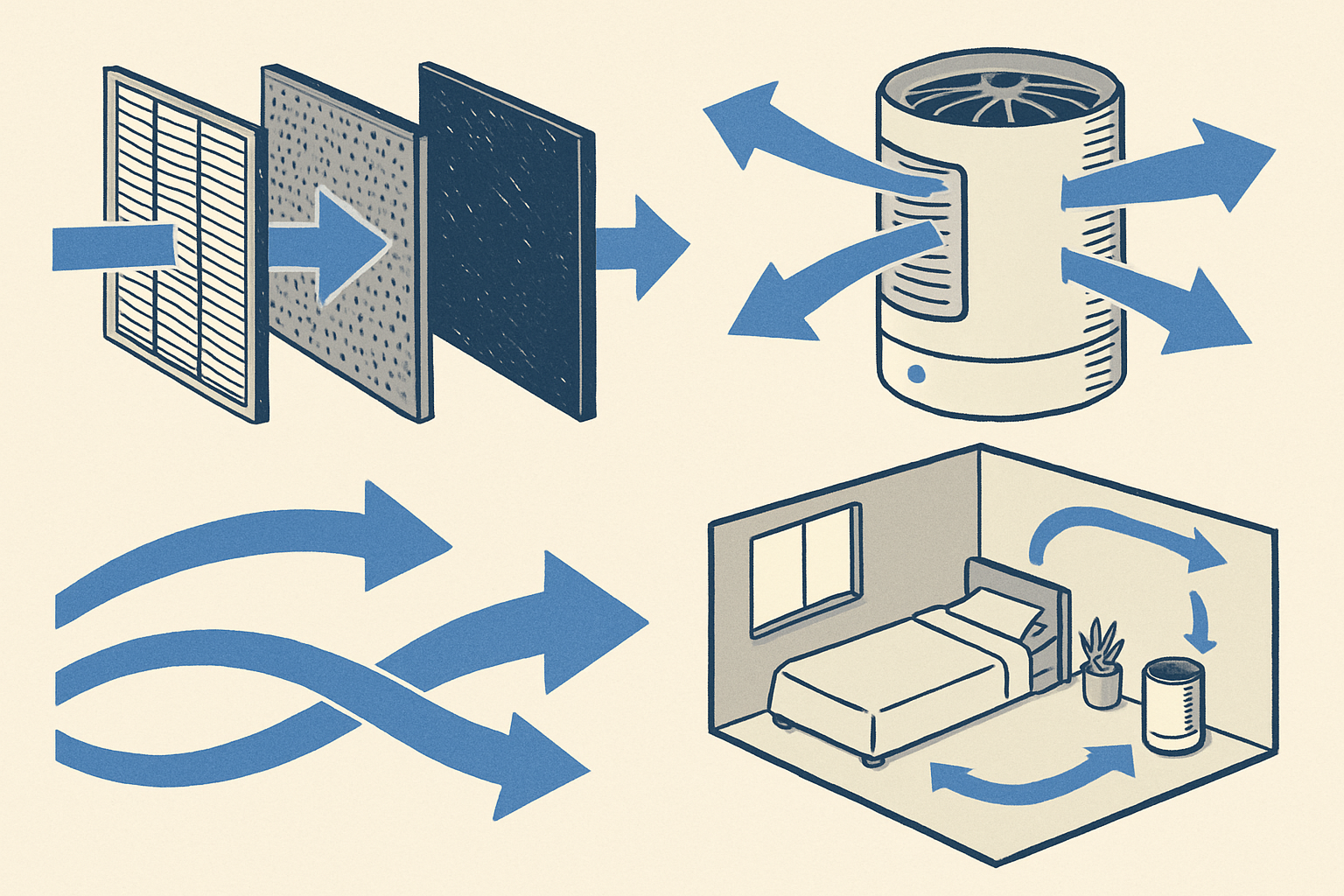
Renting changes everything about how you use an air purifier. You can't seal drafty windows with caulk, you can't upgrade the building's HVAC filters, and you're often working with awkward room layouts and shared ventilation you have no control over. Yet the advice most air purifier guides offer assumes a detached home with well-insulated walls and a cooperative landlord.
After years of living with air purifiers in apartments — and hearing from dozens of renters who bought the right unit and still got mediocre results — the mistakes that keep coming up are surprisingly consistent. Most of them are completely fixable without spending a cent more.
Who this is for
Renters running a portable air purifier in one or more rooms of an apartment or rental house. If you own your home and have more latitude to seal, ventilate, and modify, some of this still applies — but the renter-specific constraints are front and center here.
Mistake 1: Pushing the unit into a corner or against a wall
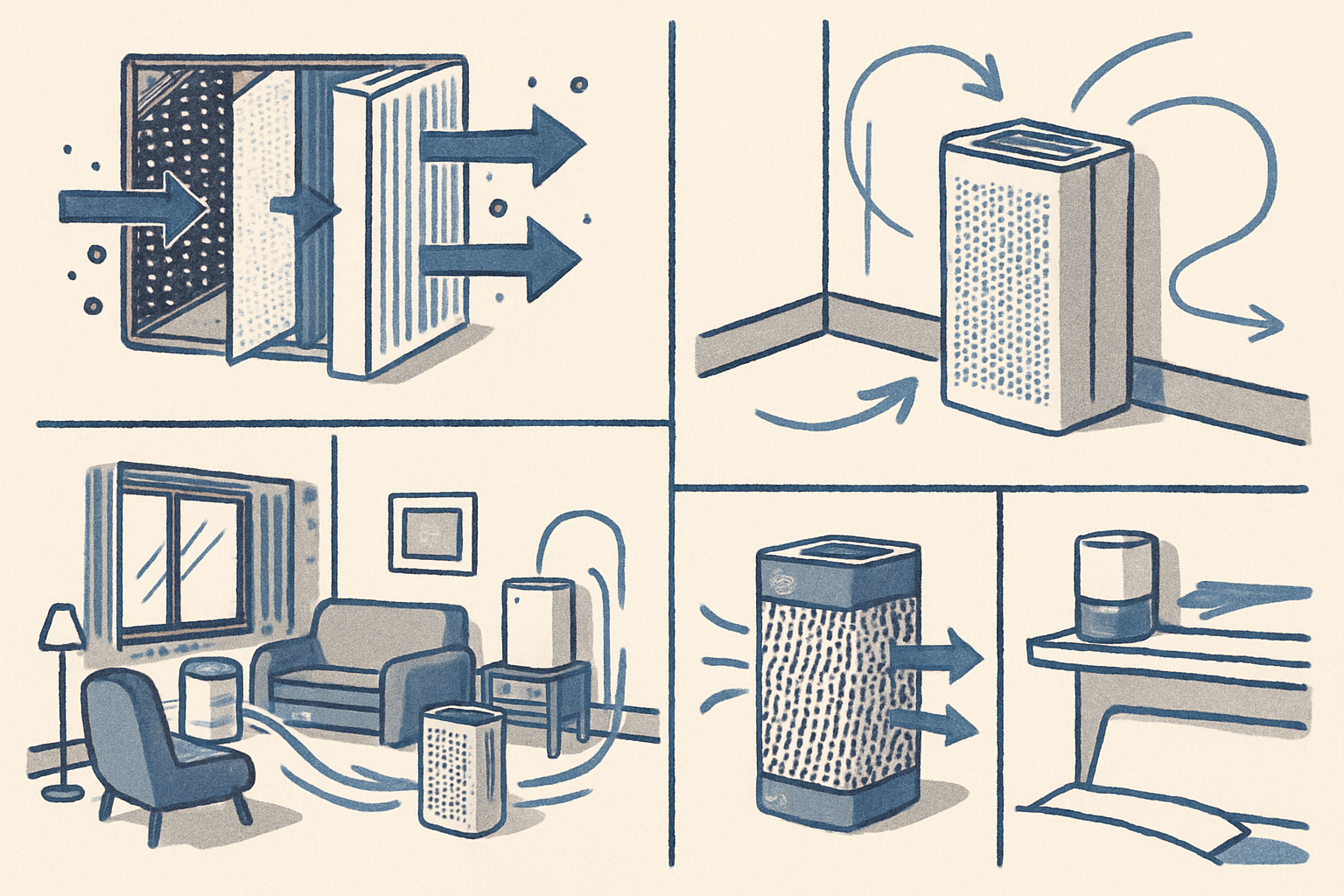
This is the single most common placement error, and it quietly cuts your purifier's effective output by a significant margin. Air purifiers work by drawing in room air, filtering it, and pushing clean air back out. When you shove the unit into a corner or flush against a wall, you're restricting intake airflow on two or three sides simultaneously.
The fix is simple: keep at least 12 to 18 inches of clearance on all sides, and position the unit where it can pull air from the center of the room rather than from a dead corner. Mid-room or near the main source of pollution — a kitchen pass-through, a pet's favorite spot — beats any tidy corner placement.
Mistake 2: Buying for the listed square footage, not your actual room
Manufacturer coverage numbers assume a room with an 8-foot ceiling, no internal walls, and ideal airflow. Your apartment almost certainly has none of those things. A unit rated for 400 sq ft in an open loft will struggle in a 300 sq ft apartment bedroom with a low ceiling, a closet alcove, and a door that stays half-closed.
As a practical rule: buy for a room size 20 to 30 percent smaller than what the label claims, or look at the CADR number (Clean Air Delivery Rate) and divide your room's cubic footage by it to estimate actual air changes per hour. Aim for at least four to five air changes per hour in rooms where you sleep or spend most of your time.
Mistake 3: Running it on low speed and leaving it there
Low-speed mode is whisper-quiet. It's also, in many units, delivering less than a third of the air-moving capacity the filter is capable of. Renters default to low because the fan noise bothers them — which is a legitimate concern — but the result is a filter doing about 30 percent of its possible job.
A better approach: run the unit on high for 30 to 60 minutes when you first get home, after cooking, or when outdoor air quality is poor. Then drop to medium or auto mode. Many modern purifiers with an auto-sensing mode will handle this themselves if you let them.
Mistake 4: Ignoring the pre-filter
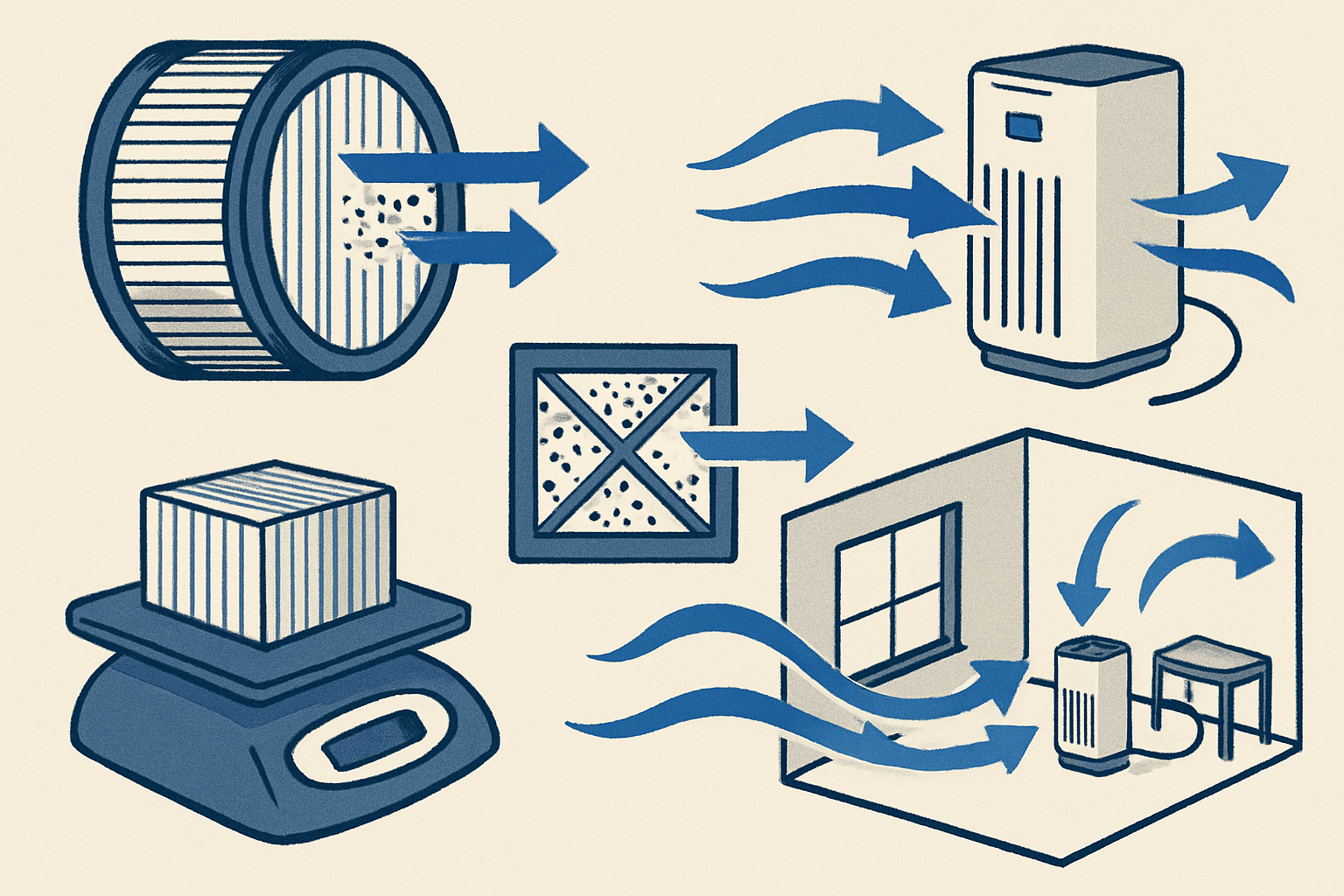
Most air purifiers have a washable pre-filter that captures large particles — hair, dust bunnies, lint — before they reach the HEPA layer. When renters skip cleaning this, the HEPA filter gets clogged faster, airflow drops, and the unit works harder for worse results.
Check and rinse the pre-filter every two to four weeks if you have pets or cook regularly, or monthly in a cleaner environment. It takes three minutes and extends the life of your more expensive HEPA filter meaningfully.
Marcus's tip from nine years of renting with air purifiers
"Set a recurring monthly calendar reminder to check the pre-filter. It sounds tedious, but in a year of living in a 1920s Chicago walk-up with two cats, that one habit has kept my HEPA filters lasting twice as long as the manufacturer's worst-case estimate."
Mistake 5: Putting the purifier in the wrong room
Renters often buy one unit and put it in the living room because that's the biggest space. But if you're spending seven or eight hours a night in your bedroom, that's where the air quality matters most for your health. Breathing cleaner air while you sleep has a more direct effect on how you feel than a slightly fresher living room you're in for two hours of TV.
If your budget allows only one unit, put it in the bedroom. Close the door while you sleep so the purifier isn't fighting to clean the entire apartment. If you later add a second unit, the living room or kitchen area is the natural next choice.
Mistake 6: Expecting the air purifier to compensate for open windows
On a high-AQI day — wildfire smoke, heavy traffic pollution, elevated pollen — opening windows to "air things out" is counterproductive if you're also running a purifier. You're pulling unfiltered outdoor air directly into a space the purifier is working to clean.
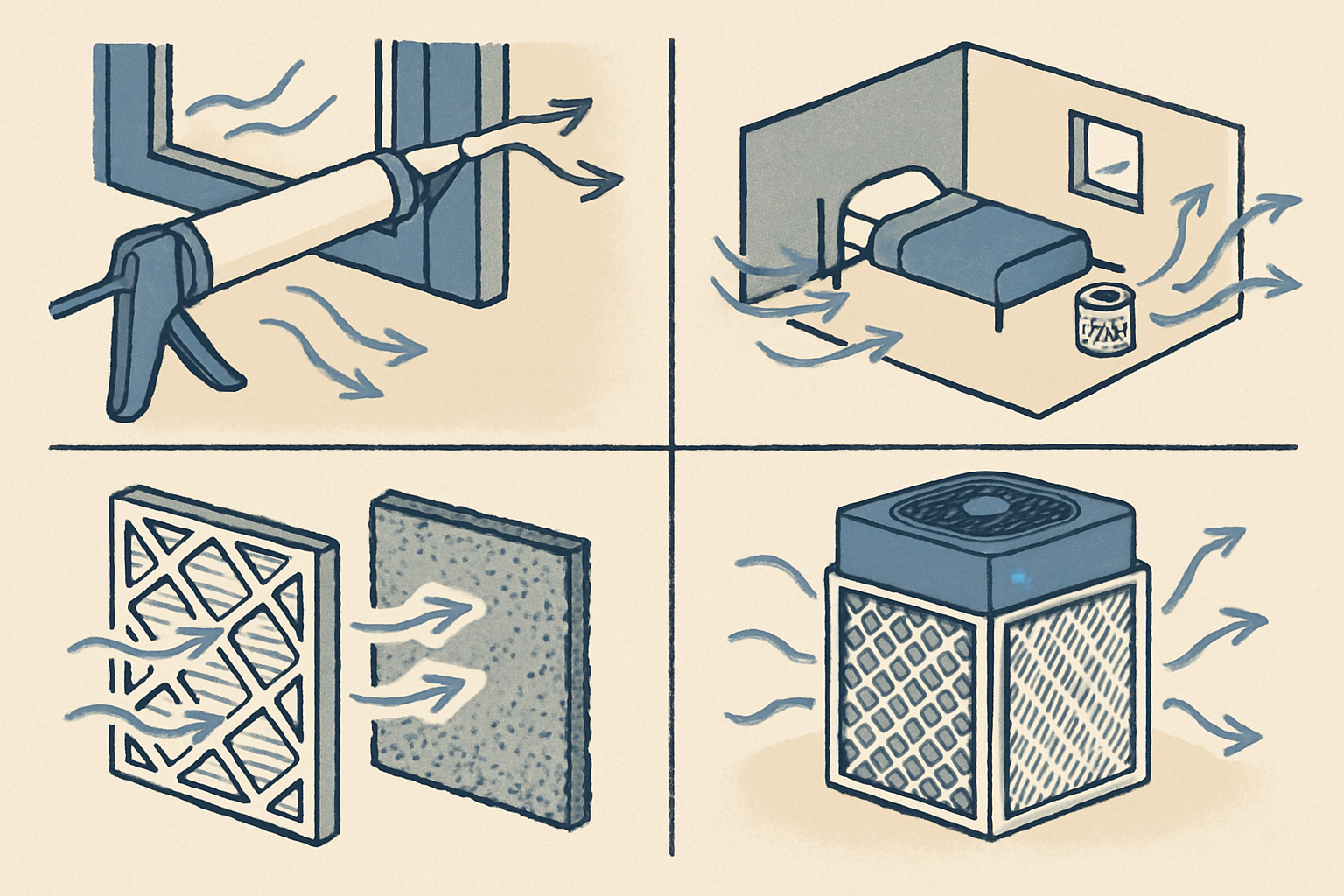
This is where renters are at a disadvantage: you often can't add weatherstripping or seal gaps around older window frames. But you can be deliberate about when you ventilate. On bad air-quality days, keep windows closed and run the purifier. Ventilate during low-AQI windows — early morning when overnight breezes have cleared pollutants — and then let the purifier recover the room afterward.
Mistake 7: Replacing filters on a calendar schedule instead of a use schedule
Filter replacement labels say "replace every 6 to 12 months." That range exists because manufacturers don't know whether you're running the unit four hours a day in a spotless studio or 24 hours a day in a smoky apartment with three cats. Your actual replacement interval depends on how hard the filter is working.
A better indicator than the calendar: airflow. Hold your hand near the output grille. If the air coming out feels noticeably weaker than it did when the filter was new, the HEPA is loading up. Some units have filter-life indicators that track actual fan hours — those are more trustworthy than a generic replacement date. In heavily polluted environments or homes with pets, filters can genuinely need replacement every four to five months.
The common thread
Most of these mistakes aren't about the purifier — they're about how it's being used. A mid-range air purifier placed well, maintained properly, and run at the right speed in the right room will outperform a premium unit shoved in a corner on permanent low, with a clogged pre-filter and an unchanged HEPA from fourteen months ago.
Once you've got placement, habits, and maintenance sorted, our full reviews section can help you identify whether a hardware upgrade actually makes sense for your space.
Find the right purifier for your rental
Our independent reviews cover units at every price point, with honest notes on real-apartment performance.
Browse Reviews→