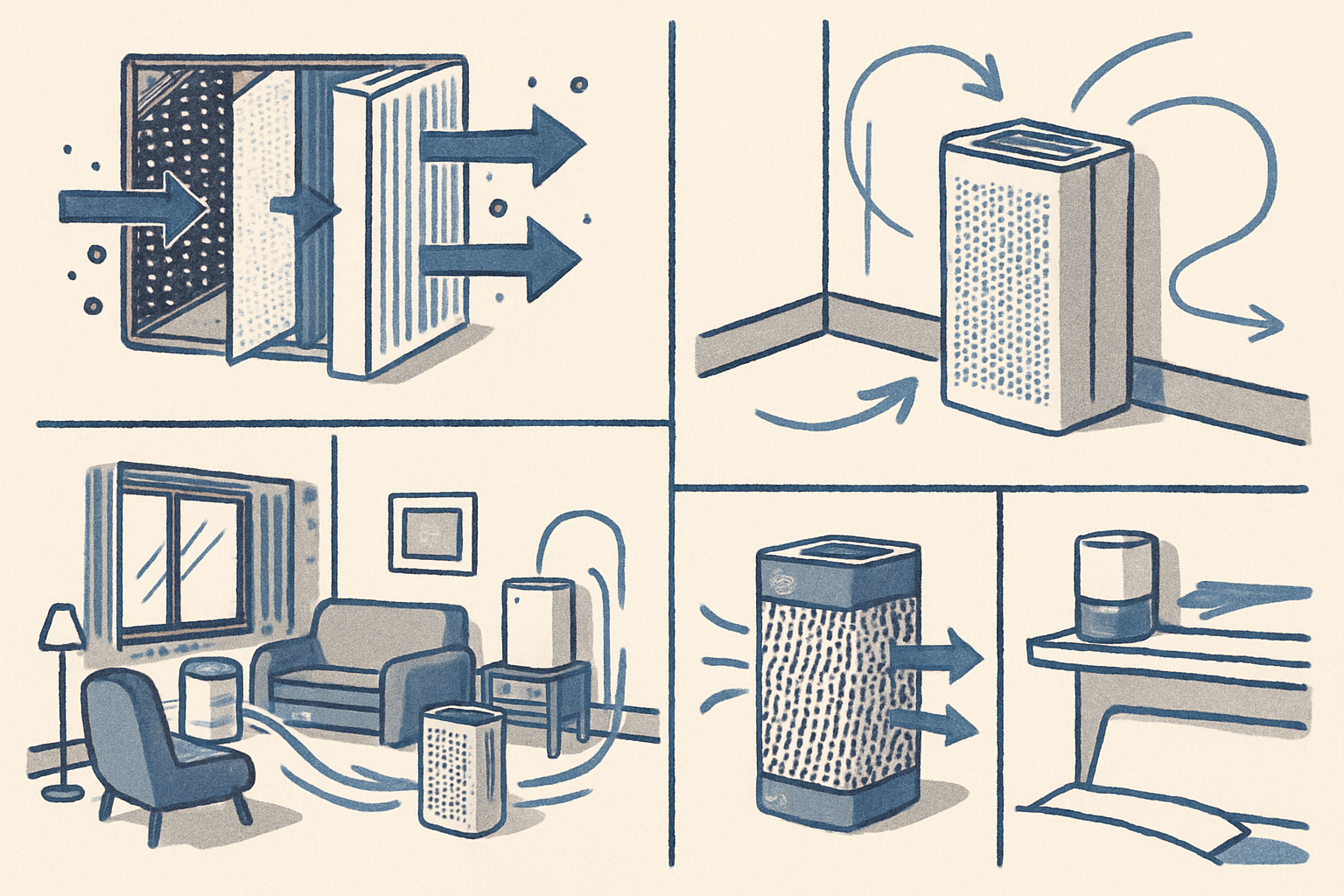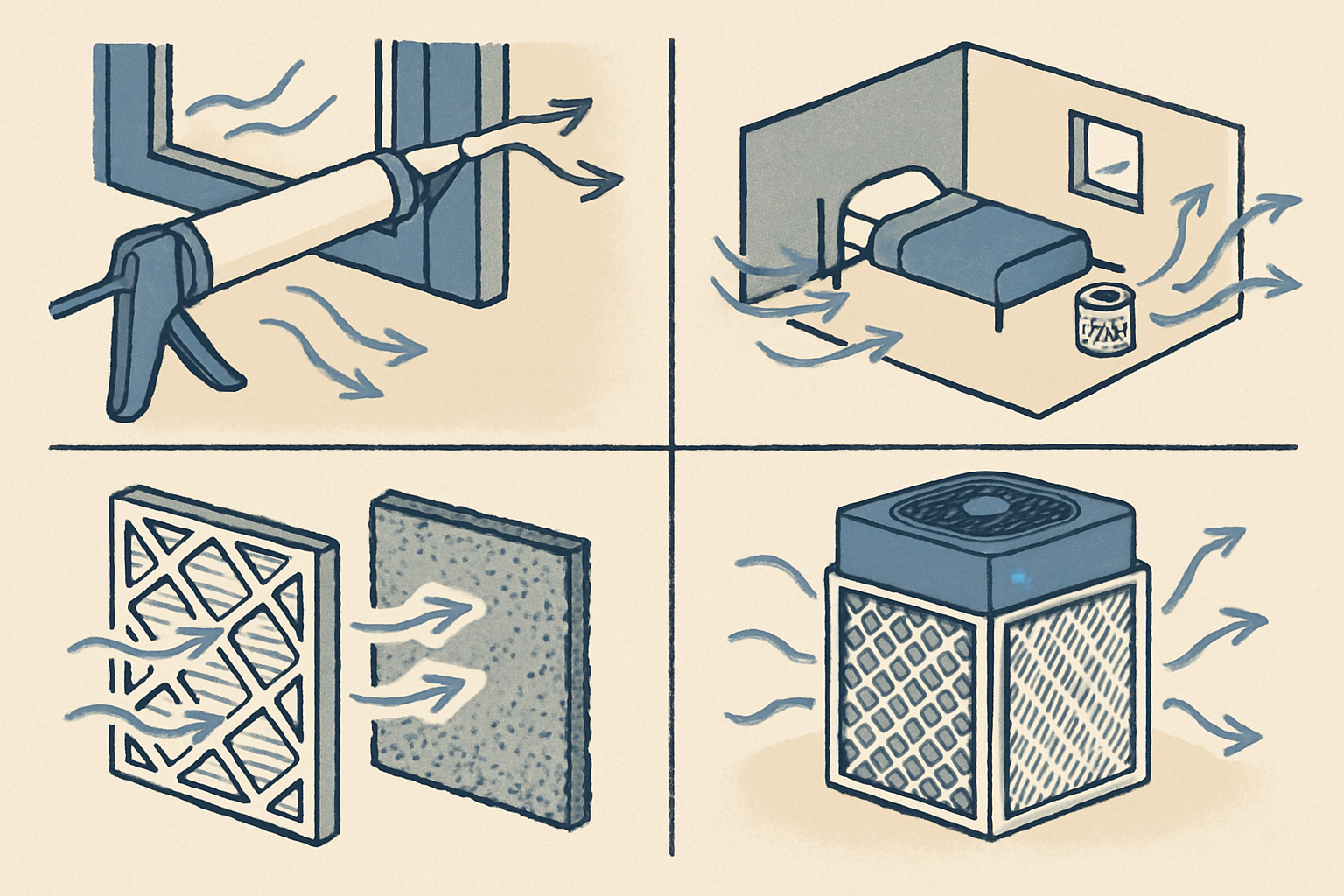
Filter replacement schedules are one of those things manufacturers print on the box and most people ignore — until the little indicator light turns red, or the machine starts smelling like old dust. The standard advice you'll see on most packaging is "every 6 to 12 months," which is nearly useless on its own. Six months under what conditions? A studio apartment with no pets, no cooking, and a window that barely opens? Or a house with two cats, a gas range, and an open skylight during wildfire season?
Over the past year, I've been collecting used HEPA filters from my own machines and from a handful of other reviewers here at Air Purifiers Tested. We weighed them against their baseline weights, held them up to light, and compared the owner experience of running them day-to-day. What we found is more nuanced than any box label admits — and in some cases, the filter you think needs replacing doesn't, while the one you're leaving in is quietly losing effectiveness.
Why filter age in months is a bad proxy
The 6-to-12-month guidance from most manufacturers is based on "average" household use — typically defined as running the purifier 8 to 12 hours per day in a room with average particulate loads. That baseline doesn't exist in most real homes.
What actually determines how fast a HEPA filter loads up is cumulative particulate exposure: how many particles per hour pass through the filter, multiplied by total runtime. A filter in a dusty 400-square-foot bedroom running 24/7 at medium speed might reach its practical limit in four months. The same filter in a low-traffic home office running six hours a day on low might still be performing well at 14 months.
The other variable is what the filter is capturing. Fine particulates — smoke, pollen, fine dust — load the filter media more deeply and are harder for the fibers to shed. Pet dander and larger particles tend to collect closer to the surface and often have a pre-filter doing much of the initial work. A filter pulling double duty without a functioning pre-filter will degrade faster, regardless of what the calendar says.
What we actually looked at
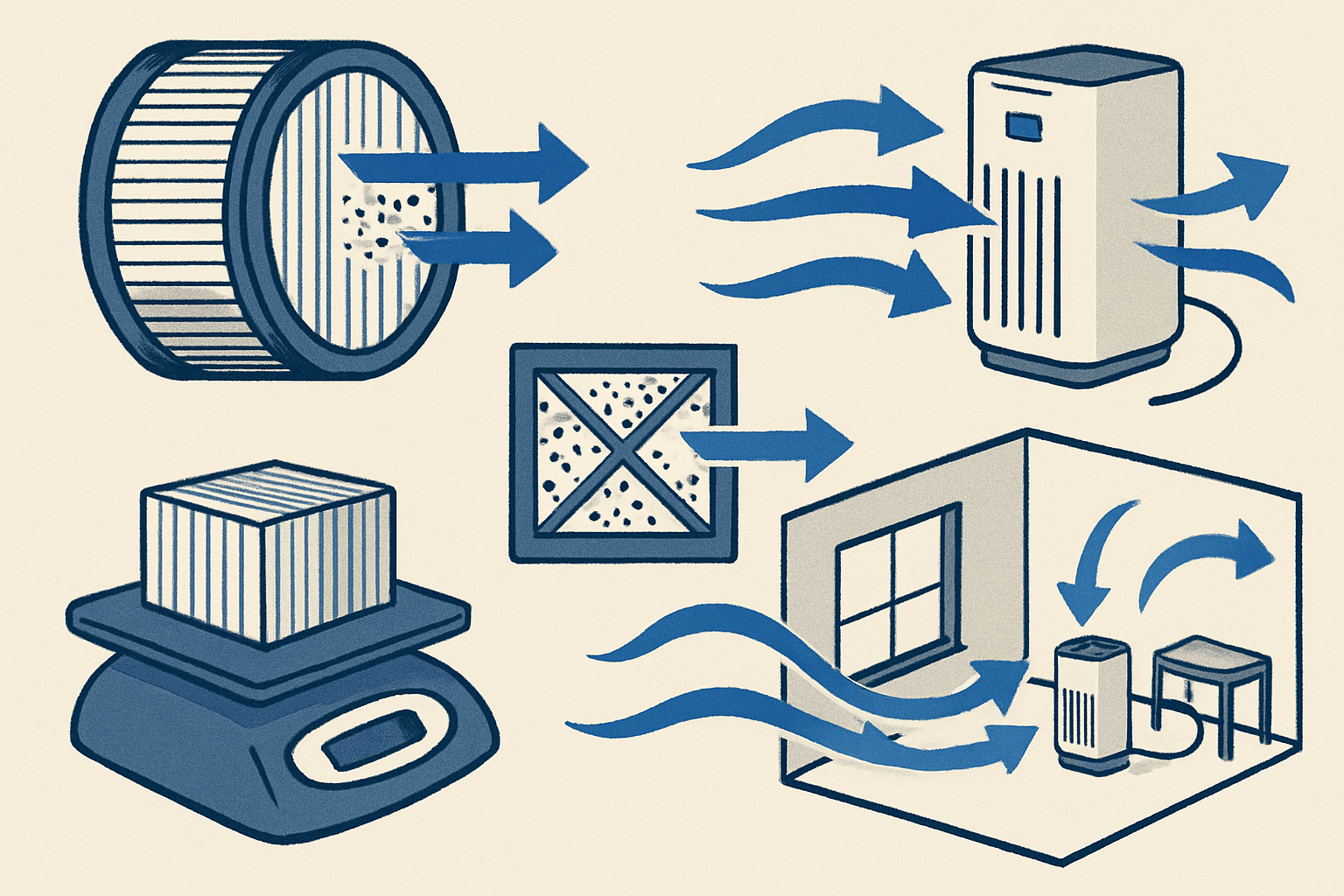
Across twelve used filters — from units we'd lived with for anywhere from three months to eighteen months — we tracked a few simple things: how much weight each filter had gained relative to its clean baseline, how airflow through the unit had changed over time (based on speed-setting noise, which climbs noticeably as static pressure rises), and whether there was any odor coming from the filter itself after removal.
The weight gain told us the most. Filters that had gained more than 20% of their clean weight were consistently the ones where the purifier was working noticeably harder — louder on the same setting, slower to bring PM2.5 readings down when we burned toast or lit incense nearby. Those were also the filters where the manufacturer's 6-month guidance turned out to be roughly right, in households with pets or regular cooking.
Filters that had gained less than 10% of their clean weight — typically from machines running in lightly used spaces — were still performing well at the 12-month mark and beyond. The manufacturer's 12-month outer limit was honest in those cases.
Pre-filter condition matters more than most people realize
If your air purifier has a washable pre-filter, cleaning it every 2 to 4 weeks doesn't just extend HEPA life — it directly affects how hard the main filter has to work. Several of the filters we looked at that had failed early were in machines whose pre-filters had been neglected for months. The HEPA was doing work the pre-filter should have been catching.
The real signs your filter needs replacing
Rather than watching a calendar, watch the machine itself. These are the signals that reliably preceded declining filter performance in our experience:
Airflow and noise changes
As a HEPA filter loads up, static pressure increases and the fan has to work harder to move the same volume of air. The practical result: the unit gets louder at the same speed setting, and on auto mode, it runs at higher fan speeds more often than it used to — even in a room that hasn't changed. This is the clearest real-world indicator we found.
Slower PM2.5 recovery times
If you have a unit with an air quality sensor (or you use a separate PM2.5 monitor), pay attention to how long it takes the machine to bring readings back down after a cooking or candle event. A filter approaching the end of its useful life takes noticeably longer to clear the air than a fresh filter in the same room.
Persistent musty or dusty odor from the unit
A heavily loaded HEPA filter can start to off-gas captured particles — especially in humid conditions. If your purifier is producing a dusty or stale smell rather than neutral or clean air, the filter may be overloaded even if it hasn't reached the manufacturer's replacement date.
Visible darkening across the filter face
Most HEPA filters are white or cream when new. Significant gray or brown discoloration across the whole filter face — not just the pre-filter — is a sign the filter media is heavily loaded. Spotting around the edges only is normal and doesn't indicate failure.
How household conditions shift the schedule
| Household condition | Expected filter lifespan | Notes |
|---|---|---|
| No pets, low cooking, low foot traffic | 10–14 months | Manufacturer's 12-month outer limit is often accurate here |
| Regular cooking, candles, or incense | 7–10 months | Carbon pre-filter, if present, helps extend HEPA life |
| 1–2 pets (shedding) | 6–9 months | Pre-filter maintenance critical; check monthly |
| Heavy pet dander (3+ animals) | 4–7 months | Some units need quarterly filter checks |
| Wildfire smoke season (heavy use) | 3–5 months during season | Replace after sustained high-AQI periods regardless of calendar |
| Allergy sufferer, purifier running 24/7 | 6–8 months | Continuous high-speed use accelerates loading |
What about HEPA filters you can vacuum?
Some manufacturers — particularly in the budget segment — describe their HEPA filters as "washable" or "vacuum-cleanable." Our experience with these is mixed. Gently vacuuming the surface of a HEPA filter can remove loose surface debris and buy a few extra weeks of performance. But the filter media itself — the dense mat of glass fibers that catches 0.3-micron particles — cannot be restored by vacuuming or washing. Once those fibers are clogged at the microscopic level, the filter needs replacing.
Don't vacuum aggressively or wash a HEPA filter with water unless the manufacturer explicitly says it's designed for that. Wet HEPA media can develop mold, and aggressive vacuuming can physically damage the fiber structure, creating gaps that reduce filtration efficiency.
Reviewer tip from Marcus
"I set a phone reminder for every 3 months — not to replace the filter, but to check it. Pull it out, look at it, weigh it if you want to be precise, and see how the machine has been behaving. That 3-month check habit is more useful than any indicator light I've seen, and it's caught overloaded filters early in two of my own units that still had months left on their 'schedule.'"
The cost angle: when to replace sooner anyway
Running a filter past its useful life isn't just a question of air quality — it's a question of motor wear. A fan working against a clogged filter draws more power and runs hotter. Over time, that shortens motor life, and air purifier motors are rarely user-replaceable. In our experience, the annualized cost of replacing filters on schedule (or slightly early, in high-load households) is almost always cheaper than replacing the unit because the motor gave out.
If you're weighing filter cost, factor in what replacement filters actually cost for the model you own before you buy. Some manufacturers price filters aggressively low on the unit and aggressively high on consumables. A $120 unit that takes $60 filters every six months costs more to run over two years than a $200 unit with $30 filters on a 10-month cycle.
The bottom line
The 6-month vs 12-month debate doesn't have a universal answer — and any manufacturer who prints one flat schedule without caveats is simplifying for the packaging, not for your home. In lightly used, low-particulate conditions, 12 months is honest. In a household with pets, regular cooking, or heavy runtime during smoke season, six months or less is realistic and sometimes conservative.
Watch the machine, not the calendar. Increased noise at a fixed speed setting, slower air quality recovery, and a dusty smell from the unit are more reliable indicators than any date printed on a sticker. And keep that pre-filter clean — it's the cheapest thing you can do to extend the expensive filter behind it.
See our air purifier rankings
We've lived with dozens of units across every major category — from budget picks under $100 to whole-room workhorses. Find the right one for your home.
Browse Reviews→